
AI Receptionist Guide for Auto Repair Shops
Create an auto-shop phone agent that gathers vehicle and symptom details, separates unsafe vehicles from routine maintenance, schedules responsibly, and reduces front-desk interruptions.
Updated October 15, 2026 · 3 min read
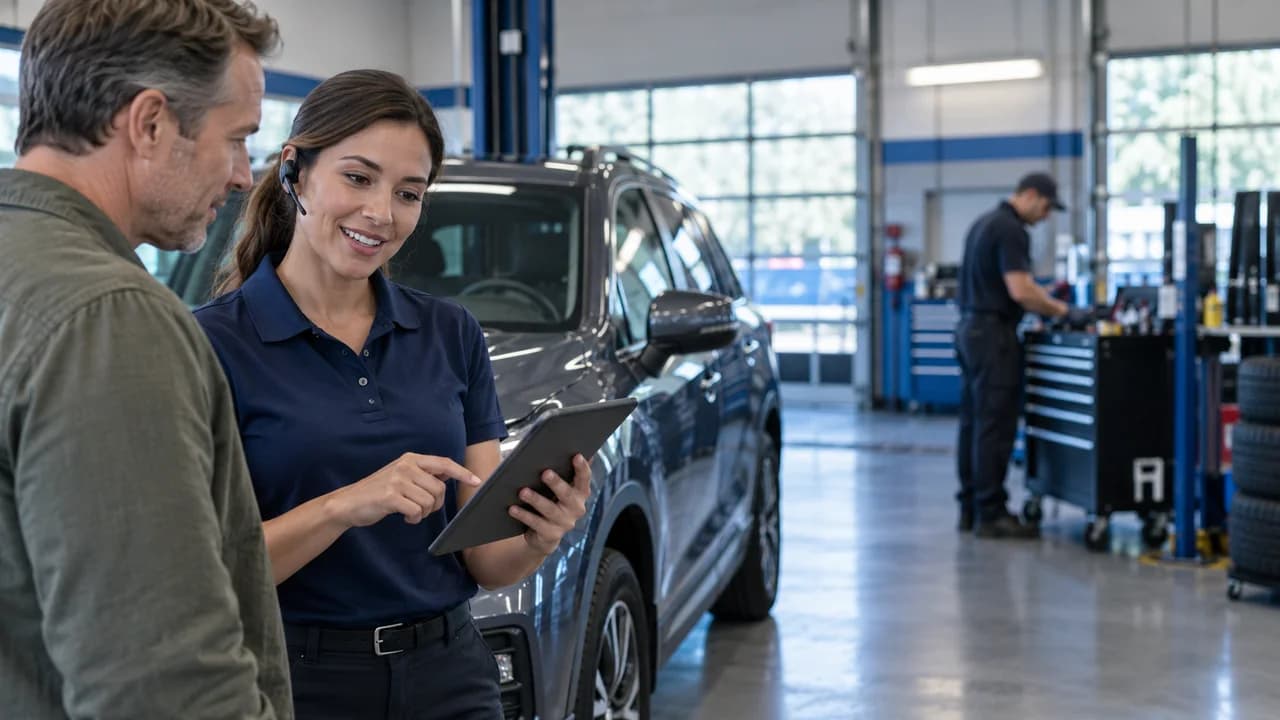
The front desk at a repair shop has to answer phones while writing estimates, checking in vehicles, locating parts, and speaking with technicians. A caller who reaches voicemail may try the next shop before anyone calls back.
An AI receptionist can handle first contact if it understands the limits of phone intake. It collects the vehicle, symptom, drivability, desired service, and timing, then uses the shop's real scheduling and towing rules. It does not diagnose the vehicle from a description.
Treat drivability as a safety question
A warning light, unusual noise, fluid leak, overheating event, brake concern, or steering problem may affect whether a vehicle should be driven. The assistant should use the shop's approved language and direct safety-critical questions to a qualified person or towing option.
For routine work, the key distinction is whether the caller wants maintenance, diagnosis, a specific repair, a tire service, a state inspection, or an estimate based on an existing diagnosis.
Capture a repair order starter, not a guess
Ask for year, make, model, approximate mileage, the caller's own description, when it occurs, and whether the vehicle is currently operable. Record exact dashboard wording when possible instead of translating it into a diagnosis.
Explain the shop's diagnostic process, drop-off policy, estimate authorization, and storage or inspection fees only from approved data. Confirm whether the appointment is a drop-off, wait service, or request awaiting staff confirmation.
- What are the year, make, model, and approximate mileage?
- What symptom or warning are you noticing?
- Can the vehicle be driven safely, or does it need towing?
- Are you seeking diagnosis, maintenance, or a known repair?
Never diagnose or quote unsupported repairs
The agent should not state that a sound 'is definitely' a particular part, clear warning lights, recommend driving with a suspected safety fault, or quote labor and parts from generic information.
Status updates require current repair-order data or a human handoff. The assistant should not infer that a vehicle is ready because an estimated completion time has passed.
Use the agent for intake before status automation
Start with new appointments, hours, location, towing instructions, and supported services. Add repair-status answers only after an approved webhook or custom integration can supply trustworthy live shop data to the agent.
Test speech recognition with makes, models, trim names, license plates, and street names. Configure the assistant to repeat critical details slowly and allow correction.
What to measure after launch
Review outcomes, not just call counts. For auto repair shops, the first useful scorecard should include:
- complete vehicle-intake records
- unsafe-to-drive calls escalated
- appointments that match shop capacity
- front-desk calls avoided without lost context
Hear a VoxPilot agent handle a real conversation.
Call a live demo or request a three-day trial shaped around your own business, call volume, and goals.