
AI Receptionist Guide for Plumbing Companies
A practical call-handling plan for plumbing companies: distinguish emergencies, collect useful job details, protect dispatch time, and turn missed calls into scheduled work.
Updated October 15, 2026 · 3 min read
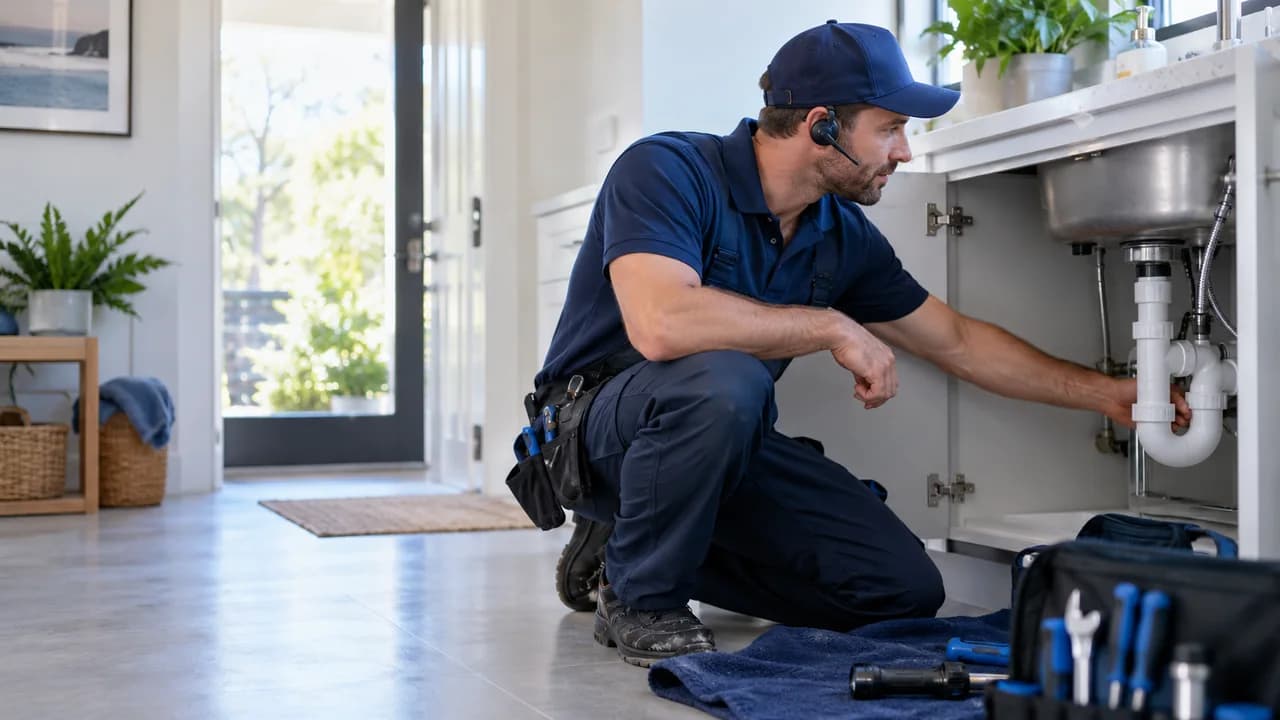
A plumbing call often begins with stress rather than a tidy service request. The caller may see water spreading across a floor, hear a toilet running overnight, or need a price for work that can wait. A useful AI receptionist must let the caller explain the problem before it starts collecting fields.
The agent's job is to organize the first conversation. It should identify the property, understand what is happening now, follow the plumber's emergency rules, and set an honest next step without diagnosing a system it cannot see.
Separate active damage from routine work
An active leak, sewage backup, or loss of water needs a different response from a faucet replacement or remodel estimate. The agent should ask whether water is still flowing, whether the caller can safely reach a shutoff, and whether the problem affects the whole property. It should never tell someone to touch electrical equipment or enter an unsafe area.
Routine callers still need clarity. Capturing fixture type, property type, access restrictions, service address, and preferred timing gives the dispatcher enough context to assign the right visit without calling the customer back for basics.
A plumbing intake that helps the dispatcher
Start with the caller's own description, then ask only the questions that change urgency or scheduling. If the caller says water is spreading, move to the approved emergency path. If they want an estimate, establish the job category and explain whether the company quotes by phone or after an on-site inspection.
Before the call ends, repeat the address and callback number, state whether the request is booked or awaiting confirmation, and send any company-approved preparation message.
- What fixture or area is affected?
- Is water actively leaking or backing up right now?
- What is the service address and property type?
- Is there safe access to the affected area?
Promise response steps, not repair outcomes
The agent can explain the company's service area, hours, diagnostic fee, and dispatch process when those facts are approved. It should not guarantee an arrival time, final price, or specific repair before a plumber evaluates the job.
Emergency wording must come directly from the business. The agent may instruct a caller to contact emergency services or a utility when the documented rule says so, but it should not improvise safety advice.
Launch with overflow and after-hours calls
Begin with new-service requests when the office cannot answer. Load service areas, hours, dispatch fees, exclusions, and emergency escalation rules. Test burst pipes, backed-up drains, water-heater questions, estimate requests, renters without owner authorization, and callers outside the service area.
Review the first week with the dispatcher. If technicians keep asking for the same missing detail, add that question to the flow instead of making the script longer everywhere.
What to measure after launch
Review outcomes, not just call counts. For plumbing companies, the first useful scorecard should include:
- urgent calls correctly flagged
- service requests with a complete address
- appointments or dispatch requests created
- calls that needed manual clarification
Hear a VoxPilot agent handle a real conversation.
Call a live demo or request a three-day trial shaped around your own business, call volume, and goals.