
AI Receptionist Guide for Restaurants
Plan a restaurant phone assistant for hours, reservations, large parties, catering, directions, accessibility, and guest concerns without interrupting front-of-house service.
Updated October 15, 2026 · 3 min read
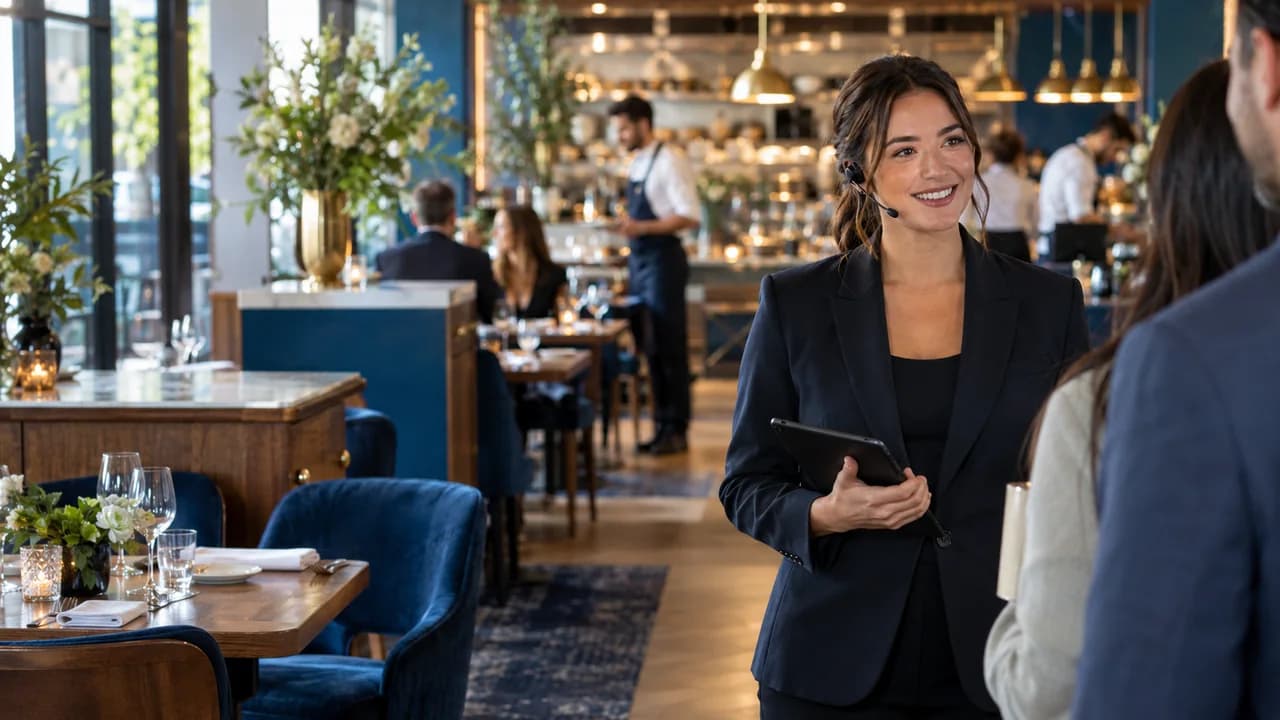
Restaurant phones ring when staff are least able to answer: during prep, service, shift changes, and weekend rushes. Many questions are routine, but large parties, catering, allergies, lost items, and guest concerns require careful handling.
An AI receptionist can reduce interruptions if it uses current hours, reservation rules, menus, event information, and escalation contacts. Stale information is worse than voicemail, so ownership of updates matters.
Answer routine questions without mishandling special requests
Hours, address, parking, reservation policy, takeout availability, dress expectations, and accessibility can come from an approved knowledge base. Allergy and dietary questions should describe available information and route decisions to trained staff rather than guarantee safety.
Large parties and private events need party size, date, time, flexibility, occasion, budget or package interest, and contact details. They should become organized event leads, not ordinary table reservations.
Know when a reservation is real
If an approved Advanced integration supplies live reservation inventory, confirm the exact location, date, time, party size, and name. Without that connection, call it a reservation request and explain how confirmation will arrive.
Cancellations, late arrivals, seating preferences, and same-day changes must follow restaurant policy. The assistant should not promise a specific table or hold time unless the system supports it.
- Is this a reservation, takeout, catering, event, or general question?
- What date, time, and party size are you considering?
- Are there accessibility or dietary details the team should know?
- What name and contact information should the restaurant use?
Keep menu, allergy, and availability data current
The agent should never guarantee that food is free of an allergen or cross-contact risk. Use the restaurant's approved statement and involve staff for specific preparation questions.
Temporary closures, holiday hours, sold-out items, kitchen cutoff times, and event buyouts need a simple update process so the assistant does not repeat yesterday's answer.
Start with high-volume questions and reservation requests
Load one location first. Verify every hour, link, policy, fee, and reservation statement, then test holiday and late-night scenarios. Give managers a fast way to update temporary information.
Add catering and private events once the sales team agrees on required fields and response timing. A complete event lead should reach the right person immediately.
What to measure after launch
Review outcomes, not just call counts. For restaurants and hospitality teams, the first useful scorecard should include:
- routine questions resolved
- reservation requests accurately captured
- large-party and catering leads created
- calls transferred to the host stand unnecessarily
Hear a VoxPilot agent handle a real conversation.
Call a live demo or request a three-day trial shaped around your own business, call volume, and goals.