
AI Receptionist Guide for Roofing Companies
A roofing phone-agent plan for active leaks, storm surges, inspection requests, replacement leads, service areas, and responsible insurance-related language.
Updated October 15, 2026 · 3 min read
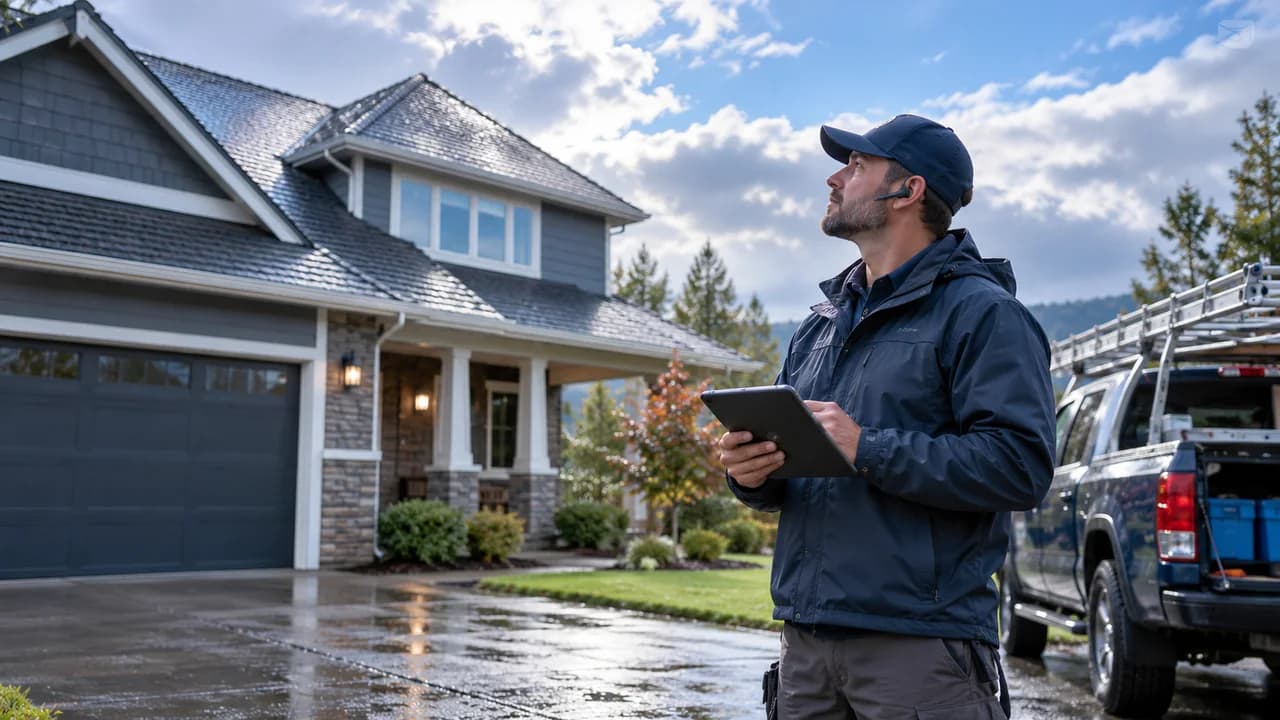
Roofing calls spike after weather events, often while crews are inspecting properties and office staff are overwhelmed. The caller may have active interior water, visible storm damage, an aging roof, or a request connected to a real-estate deadline.
An AI receptionist can preserve those opportunities by recording damage, property, timing, access, and insurance context while following the roofer's priority and service-area rules.
Prioritize active exposure without overpromising
Active water intrusion, openings in the roof, fallen debris, and structural concerns deserve quick recognition. The agent can flag them and share approved temporary-safety language, but it should not tell callers to climb on a roof or promise emergency tarping before dispatch confirms.
Storm volume makes arrival promises risky. Use request windows or callback commitments that the team can actually meet, and explain clearly when an inspection is pending rather than scheduled.
Separate repair, inspection, and replacement opportunities
Collect property address, ownership or authorization, roof type when known, age when known, damage description, interior impact, storm date, and preferred inspection timing. Ask whether this is an insurance-related claim without presenting the contractor as an adjuster.
Real-estate and commercial calls may have deadlines, multiple decision makers, access procedures, or documentation requirements. Route them to the correct estimator instead of treating every lead as a residential repair.
- Is water entering the building now?
- What is the property address and roof type, if known?
- Was there a recent storm or specific event?
- Are there insurance, closing, or inspection deadlines?
Use careful insurance language
The assistant may explain the company's inspection and documentation process. It should not guarantee coverage, waive deductibles, interpret a policy, promise claim approval, or say damage requires replacement before inspection.
Service zones, minimum job sizes, roof types, financing statements, and inspection fees need current approved entries in the knowledge base.
Prepare the storm mode before the storm
Create normal-volume and surge-volume rules. During a surge, the assistant may need to collect requests and set response expectations rather than display a calendar that is changing by the minute.
Test addresses at the edge of the service area, renters, property managers, active leaks, old damage, commercial roofs, and callers asking what insurance will pay.
What to measure after launch
Review outcomes, not just call counts. For roofing companies, the first useful scorecard should include:
- active leaks identified
- inspection requests with complete property data
- leads inside the service area
- insurance conversations without unsupported promises
Hear a VoxPilot agent handle a real conversation.
Call a live demo or request a three-day trial shaped around your own business, call volume, and goals.